How to Play 99 Nights in the Forest
A practical new-player route: surviving your first night, the campfire loop, which class and talents to pick, useful weapons, and how the 99-night run actually ends. Built from community tips and the game's real mechanics — no cheat scripts.
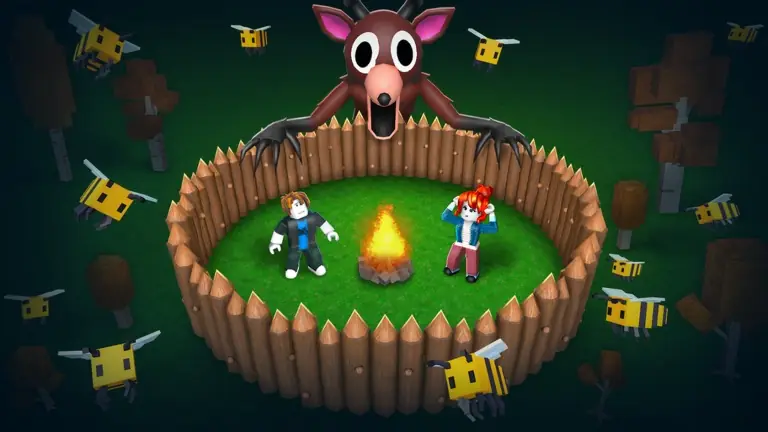
99 Nights in the Forest is a team survival-horror game: build and cook by day, survive the nightly Deer by staying near campfire light. Your real goal is a rescue mission — save four Missing Children and make it to 99 nights. This guide walks you through the route and the systems that matter most.
Your First Night (the part that gets new players)
- Start a run from the lobby matchmaking box; choose solo or up to 5 players. Bigger teams make the game harder.
- Chop wood immediately at spawn. There's always a guaranteed coal pile or 6 logs at fire level 1 — use it to push the campfire to level 2–3 fast.
- Upgrade the campfire to level 3–4 on day one. The fire is your night safety zone; a higher level lets you save kids earlier.
- Kill bunnies for meat (and a Bunny Foot, which unlocks better tools with the Pelt Trader). Drop raw meat on the campfire to cook it.
- Know: The Deer does NOT attack on night one. Use that free first night to grind wood, food and scrap — you'll thank yourself on night two.
The single biggest new-player mistake is ignoring the campfire level. The Deer only respects the fire's light — if the fire goes out at night, you have nowhere safe to run.
Head-Start Goals (Day 1–5)
- Rescue Dino Kid between day 1–3 for early multipliers (Missing Children give a day booster each).
- Craft a bed before day 5 — skip the night and stabilise your route.
- Squeeze in one scrap run to upgrade the crafting bench; the regular bed only costs 5 scrap.
- Gather a Bunny Foot at night one or across day two, while the Deer stays mostly docile.
Classes & Which to Pick First
Classes give a starting loadout and passive, and are bought with Diamonds (earned from codes and achievements). Two good value picks for learners; the Assassin is the strongest but priciest.
| Class | Cost | Starts with | Best for |
|---|---|---|---|
| Lumberjack | 70 Diamonds | Good Axe | All teams — accelerates wood, building & crafting |
| Ranger | 70 Diamonds | Revolver | Solo & early cave clearing |
| Camper | — | — | New solo players learning hunger & routes |
| Medic | — | Medic gear | Public squads — reliable revives |
| Cook | — | Cook gear | Long team runs — food stability |
| Assassin | 500 Diamonds | Katana + 120 Throwing Knives | Experienced monster-hunters (higher risk) |
Beginner pick: Lumberjack is the best long-term investment (every run needs wood). Solo: Ranger gives early combat control; Camper is safer while learning. Team: Lumberjack + Medic + one combat class is a solid base. Save your Diamonds rather than buying the Assassin early.
Talents (the layer above classes)
Talents shape how your survivor performs through harder nights — think of them as scaling your class role. Choose a set that supports your class instead of fighting it.
- Survival: health, hunger, recovery — mistake forgiveness. Best first priority.
- Movement: faster scouting and safer escorts.
- Resources: more wood, scrap, loot speed or storage.
- Team utility: revives and role-based support.
Reroll rule of thumb: keep broad survival perks and class-fit bonuses; reroll tiny bonuses to tasks you rarely do. A beginner build of survival + resource perks rarely goes wrong.
Weapons & Gear
Gear comes from your class's starting loadout, from exploring (watchtowers, buildings, chests), from trading pelts with the Pelt Trader, and from limited crafting. Essential ranged saves-on-rescue: the Revolver (Ranger start) pairs well with a Spear. For later kids you'll want higher-power ranged options for the tougher bear-guarded rescues.
- Katana — fast, high melee damage; Assassin's signature.
- Good Axe — Lumberjack start; chops wood and works as early self-defense.
- Revolver / Rifle / Tactical Shotgun — ranged progression for rescue runs.
Bandages & Revives
When a teammate's health hits zero they go downed (immobile, helpless) rather than dying instantly. A bandage revives them on the spot; without one they respawn far from the group and lose their gear. Bandages are not craftable — the Medic class is the only guaranteed reliable source, so bring a Medic on squads and keep a bandage on you for late runs.
True Story & How the Game Ends
The game's premise — rescuing four lost children from a vast jungle — is inspired by a real survival story: the 2023 crash of four Huitoto children in the Colombian Amazon, who survived about 40 days before rescue. The monsters themselves (like The Deer) are fictional.
In-game, the ending isn't a boss fight or a cutscene — it's completing the rescue mission. Use the bulletin board near spawn to locate the first Missing Child, craft a map to make sense of the directions, rescue all four kids, and survive 99 nights. It's an endurance run, not a combat one.
Base Building & Campfire Defense
Your campfire is your base. Every night the unkillable Deer hunts anything outside its light, so "defense" in 99 Nights in the Forest means keeping the fire alive and leveling it — not building walls (there are no buildable walls; the fire's safe zone is the mechanic). Priorities:
- Level the campfire early — level 3–4 by the first night is the single biggest safety upgrade. Higher fire levels unlock traders and better gear.
- Always have logs ready — stock wood before nightfall so you can feed the fire through the night without leaving the safe zone.
- Learn the safe-zone edge — you can farm the edge of the light; the Deer can't reach you inside it, and a flashlight stun buys a few seconds to dash back in.
Essential Structures & Traders (Unlock Order)
Structures here mean the campfire-level-gated services — treat them as upgrade gates:
| Unlock | What it gives | When to prioritize |
|---|---|---|
| Campfire level 2–3 | First trader access, better cooking | Day 1–2 — food stability |
| Crafting bench upgrade | More gear and building recipes | Day 2–4 — before longer scouting |
| Bed | Skip a night to stabilise your route | Before day 5 — route safety |
| Bulletin board + map | Locate Missing Children for rescue runs | Mid-game — the rescue arc |
Mastering the Pelt Trader
The Pelt Trader (near the campfire sign) exchanges animal pelts for unique items. The single most important early purchase: a Bunny Foot from bunny drops, which unlocks better tools. Wolf and Bear pelts trade well — but spend deliberately: pelts are your reliable mid-game currency, so save them for tools/weapons over cosmetic trades. Meat from hunted animals also keeps the team fed, so hunting doubles as food and trade income.
Mid-Game Progression (Day 5+)
Once the fire is level 4–5 and you have a bed, the run shifts from survival to rescue:
- Start longer scout routes — the map grows with campfire level; bring a ranged weapon, food and a bandage.
- Upgrade weapons — move from Spear/Revolver toward Rifle or Tactical Shotgun for cave guards.
- Define team roles — Lumberjack keeps wood, Medic carries revives, a combat class clears caves.
- Use the bulletin board — it points to the next Missing Child; craft a map to read the directions.
Rescuing the Children (Tactics)
Rescues are the win condition — here's how to do them without throwing a run:
- Check the bulletin board near spawn to locate the first Missing Child.
- Craft a map to make sense of the directions.
- Pack for the trip — food, bandages (or a Medic), and a ranged weapon for cave guards.
- Rescue in difficulty order — Dino Kid first (easiest, day 1–3), then Kraken Kid, Squid Kid, Koala Kid (toughest).
- Plan the return — rescue runs can push you past nightfall; keep wood for a temp fire or route home before the Deer's hour.
Advanced Survival Tips
- Solo vs team routing — solo: self-sufficient opener (Ranger/Camper), never overcommit from the fire. Team: split gatherers and a dedicated rescue pair.
- Night return timing — be inside the light before dark; a flashlight stun is a rescue tool, not a travel plan.
- Resource splitting — wood, scrap and meat should be split across the team so no single player's death loses everything.
- Don't overfight — survival and rescue beat combat farming; the unkillable monsters waste ammo.
- Emergency behavior — if the fire runs low at night, feed it from your carried logs before it dies; if you're caught outside, flashlight-stun and sprint to the nearest light.
How-to-Play FAQ
How do I build a safe base in 99 Nights in the Forest?
Your campfire is your base — there are no buildable walls. Keep the fire leveled (3–4 by night one) and stock logs so you can feed it through the night. The fire's light is the safe zone; a flashlight stun covers escapes.
What should I build first in 99 Nights?
Campfire levels first (traders and gear gate on it), then a crafting bench upgrade, then a bed before day 5 to skip nights safely. The bulletin board + map come when you start rescue runs.
How do you rescue the children in 99 Nights?
Use the bulletin board to find each Missing Child, craft a map for directions, and bring food, bandages and a ranged weapon. Rescue in difficulty order — Dino Kid first (day 1–3), Koala Kid last.
What should I buy from the Pelt Trader?
The Bunny Foot early (unlocks better tools), then tools and weapons over cosmetic trades. Pelts are your reliable mid-game currency — spend deliberately.
What changes in the mid-game of 99 Nights?
After day 5 with a leveled fire and a bed, the run shifts from survival to rescue: longer scout routes, better weapons (Rifle/Shotgun), defined team roles, and the bulletin-board rescue arc.
How do I play 99 Nights in the Forest solo?
Start a solo run from the lobby. Solo has no revive support, so pick a self-sufficient opener and keep the campfire topped up every day. The Deer's first-night pass is your biggest window.
What should I do on the first night in 99 Nights?
Because the Deer doesn't attack night one, spend it upgrading the campfire to level 3–4, chopping wood, and stocking cooked meat. Night two is when the real pressure starts.
What is the survival loop in 99 Nights?
Gather by day (wood, scrap, meat) → upgrade the campfire → survive the night inside its light → level up and rescue kids → repeat toward 99 nights.